
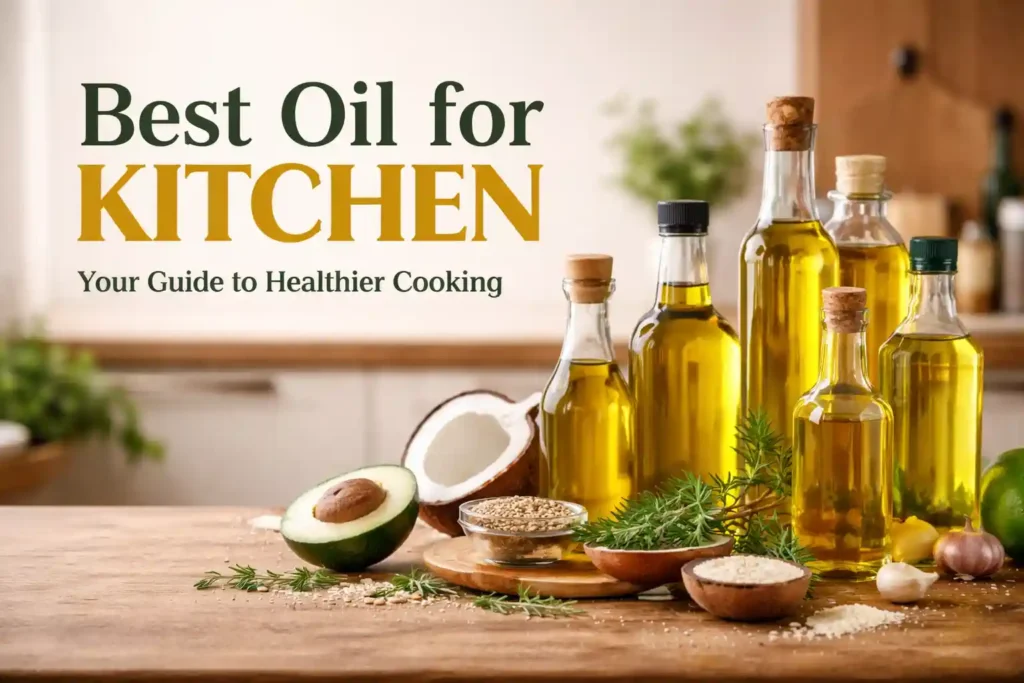
Choosing the best oil for your kitchen goes far beyond taste, it impacts your health, the flavor of your food, and even how well your dishes cook. With so many options available in the market today, from traditional favorites to global trending oils, many people are confused about what to use and when. In this comprehensive guide, we break down the healthiest cooking oil options, their benefits, uses, and expert advice, so you can make the best choice for your family’s health.
Why Choosing the Right Cooking Oil Matters
Cooking oil isn’t just a vehicle for heat, it’s a source of fats that can either support good health or contribute to health risks when used excessively or improperly.
Here’s what to consider when selecting an oil:
- Fat type: Unsaturated fats like monounsaturated (MUFA) and polyunsaturated (PUFA) are generally better for heart health than saturated fats.
- Smoke point: Oils with higher smoke points are more stable at high temperatures and less likely to release harmful compounds.
- Heat stability: Some oils degrade at high heat, losing nutrients and forming oxidative by-products.
The best cooking oil is one that balances nutritional quality with stable performance in your kitchen tasks, whether frying, sautéing, or drizzling on salads.
Top Healthy Oils for Everyday Cooking
1. Extra-Virgin Olive Oil (EVOO) – Heart-Health Champion
- Best for: Low-to-medium heat cooking, salads, dressings
- Why it’s great: High in heart-healthy monounsaturated fats and antioxidants that support cardiovascular health.
- Health edge: Research shows EVOO helps lower “bad” LDL cholesterol and reduce inflammation.
- Note: Not ideal for very high heat (>180°C), but excellent for sautéing and roasting.
Tip: Use EVOO as your go-to oil for salads, light cooking, and flavor enhancement.
2. Mustard Oil – Traditional Indian Favourite
- Best for: Indian cooking styles like tadka, shallow frying, curries
- Health perks: Rich in omega-3 and omega-6 fatty acids with strong flavor and antioxidant potential.
- Smoke point: Around 250°C — robust for high heat.
- Flavor: Earthy, pungent taste that enhances traditional Indian recipes.
Pro Tip: Choose cold-pressed versions for maximum nutrition and flavor.
3. Rice Bran Oil – Balanced & Versatile
- Best for: Stir-frying, deep-frying, everyday use
- Benefits: Good mix of mono- and polyunsaturated fats; supports cholesterol balance.
- Heat stability: High smoke point (~255°C), ideal for high-temp cooking.
Rice bran oil combines performance and nutrition, making it increasingly popular in kitchens.
4. Groundnut (Peanut) Oil – Everyday Workhorse
- Best for: Deep-frying, stir-frying, regular cooking
- Features: Neutral flavor, stable at high heat, rich in vitamin E.
- Smoke point: Around 230–235°C.
Great for daily meals, especially if you prefer a non-pungent flavor and robust heat tolerance.
5. Coconut Oil – Traditional & Popular
- Best for: Certain traditional dishes, bakes, light frying
- Why used: Especially popular in South Indian cuisine for its distinct taste.
- Caution: Higher in saturated fats — use in moderation and pair with balanced diet choices.
Coconut oil provides unique flavor and texture but isn’t the top choice if heart health is the priority.
6. Sesame Oil – Antioxidant-Rich Option
- Best for: Mild sautéing, flavoring, finishing dishes
- Benefits: Contains antioxidants and vitamin E; adds a warm aroma.
- Smoke point: Moderate — watch heat carefully.
Used sparingly, sesame oil elevates flavor and adds nutritional value in many dishes.
7. Avocado Oil – Modern Multifunctional Oil
- Best for: High-heat cooking, grills, sautés
- Why consider: High in monounsaturated fats and has a high smoke point (~270°C).
- Flavor: Mild and neutral, perfect for Western cooking styles.
A great addition if you want versatility and stable high-heat behavior.
Oils to Use With Caution
Some oils, while popular, may not be the healthiest choices for daily use:
- Refined vegetable oils – Often stripped of nutrients and may oxidize at high heat.
- Highly processed seed oils – Can degrade at cooking temperatures common in kitchens.
- High saturated fat oils (e.g., palm oil) – Best limited, as they can raise “bad” cholesterol.
How to Choose the Right Oil for Your Cooking Style
| Cooking Method | Best Oil Choices |
|---|---|
| Low heat / salads | Extra-virgin olive oil, sesame oil |
| Medium heat / stir-fry | EVOO, rice bran oil, groundnut oil |
| High heat / deep-frying | Rice bran oil, cold-pressed mustard, groundnut oil |
| Traditional Indian recipes | Mustard oil, sesame oil, coconut oil |
| Heart-healthy diet | EVOO, avocado oil |
Smart Kitchen Tips for Oils
- Store properly: Keep oils in cool, dark places to prevent oxidation.
- Avoid overheating: Oils broken down by heat can form harmful by-products.
- Mix and rotate oils: Using more than one type can balance flavor and nutrients.
- Cold-pressed over refined: Cold-pressed oils retain more nutrients and antioxidants.
Conclusion
There’s no single “best oil” for every kitchen, but by understanding the health benefits, smoke points, and cooking needs, you can pick the right oil for every dish. From extra-virgin olive oil for heart health to mustard and rice bran oils for Indian cooking, the best choice blends nutrition with culinary needs. Use oils wisely, store them carefully, and remember that moderation and variety are the keys to healthy eating.
FAQs
Which oil is best for frying?
For frying, oils with a high smoke point, like rice bran oil, groundnut oil, and avocado oil, are ideal because they can withstand high temperatures without breaking down.
Can I use olive oil for cooking?
Yes, extra-virgin olive oil (EVOO) is great for low-to-medium heat cooking, sautéing, and salads. However, it is not suitable for very high heat.
Is mustard oil good for daily cooking?
Yes, mustard oil is excellent for traditional Indian cooking and high-temperature cooking. Opt for cold-pressed mustard oil for maximum health benefits.
Which oil is healthiest for everyday use?
The healthiest oils for everyday use include extra-virgin olive oil for salads and low-heat cooking, and rice bran oil for general cooking due to its balanced fatty acid profile.
What oil is best for heart health?
Olive oil is considered one of the best oils for heart health due to its high content of monounsaturated fats and antioxidants.
Also read about: Leather Sofas vs Fabric Sofas Comparison Guide