
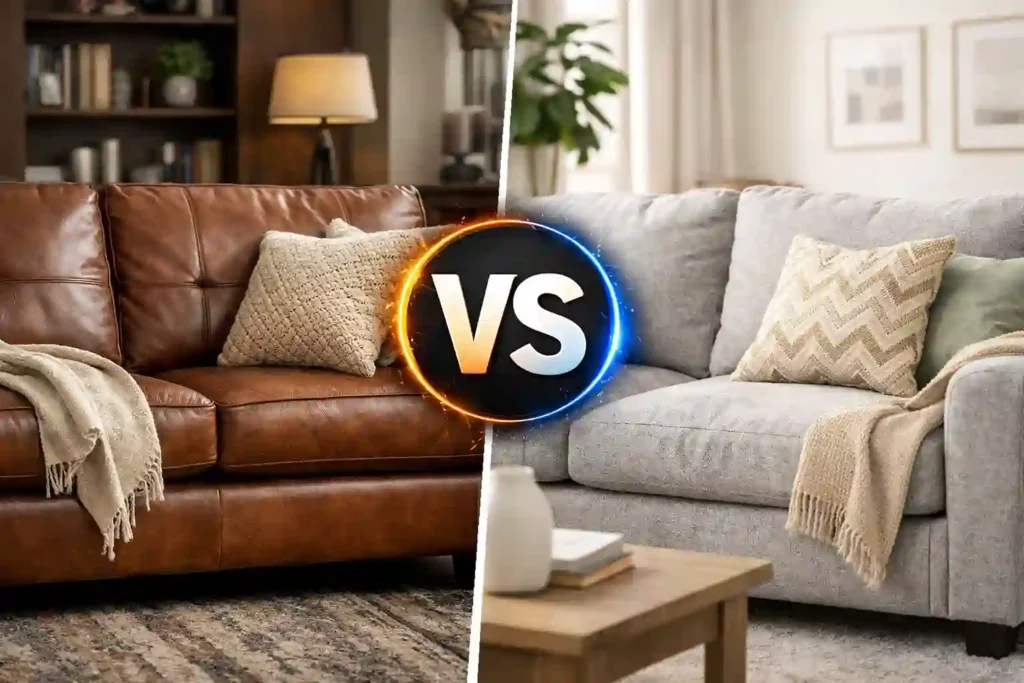
When buying a new sofa, one of the biggest decisions you’ll face is choosing between a leather sofa and a fabric sofa. Both options offer unique benefits, and both have certain drawbacks. Your final decision should depend on your lifestyle, budget, climate, interior style, and long-term expectations.
This detailed guide compares leather sofas vs fabric sofas in terms of comfort, durability, maintenance, cost, pet-friendliness, sustainability, and resale value—so you can confidently invest in the right one.
What Is a Leather Sofa?
A leather sofa is upholstered using natural animal hide (usually cowhide) or synthetic alternatives like PU or PVC. Leather sofas are available in different grades:
- Full-grain leather – Highest quality, extremely durable, develops a rich patina over time.
- Top-grain leather – Slightly processed but still premium and long-lasting.
- Corrected/bonded leather – Lower quality, more affordable.
- Faux/vegan leather – Synthetic or plant-based alternatives.
Quality matters significantly. High-grade leather can last decades, while lower-grade leather may peel or crack over time.
What Is a Fabric Sofa?
Fabric sofas are upholstered using textile materials such as cotton, linen, wool, polyester, microfiber, or blended performance fabrics. Modern performance fabrics now include:
- Stain-resistant coatings
- Water-repellent technology
- Anti-microbial finishes
- High rub-count durability ratings
Fabric sofas offer greater variety in colours, textures, and patterns compared to leather.
Leather Sofas vs Fabric Sofas: Detailed Comparison
1. Comfort & Feel
Fabric Sofas:
- Softer and warmer to the touch
- More breathable
- Ideal for cold climates
- Better for long lounging sessions
Leather Sofas:
- Smooth and luxurious feel
- Cool initially, warms with body heat
- May feel sticky in humid climates
If comfort is your top priority, fabric generally wins. If you prefer a sleek, premium feel, leather stands out.
2. Durability & Lifespan
Leather Sofas:
- High-quality leather can last 15–25+ years
- Resistant to tearing and pilling
- Develops character with age
Fabric Sofas:
- Standard fabric lasts 7–15 years
- Performance fabrics last longer
- May show wear sooner in high-traffic homes
Leather usually has the edge in long-term durability, especially in busy households.
3. Maintenance & Cleaning
Leather Maintenance:
- Easy to wipe spills
- Requires occasional conditioning
- Avoid direct sunlight
Fabric Maintenance:
- Needs regular vacuuming
- Stains require spot cleaning
- Professional cleaning recommended annually
For easy surface cleaning, leather is more convenient. However, washable slipcovers make fabric a strong competitor.
4. Pet & Child Friendliness
Leather:
- Easy to clean spills and pet hair
- Can scratch if low quality
Fabric:
- Pet hair may stick
- Performance fabrics resist stains better
- Removable covers ideal for families
Families with kids often choose stain-resistant fabric, while pet owners prefer thicker leather.
5. Style & Design Options
Fabric Sofas:
- Huge range of colours and prints
- Works well in modern, boho, or eclectic spaces
- Easier to refresh with slipcovers
Leather Sofas:
- Classic and timeless appearance
- Best suited for contemporary, industrial, or luxury interiors
- Limited colour range but rich texture
If you love experimenting with décor, fabric offers more flexibility.
6. Cost Comparison
Fabric Sofas:
- Budget-friendly options available
- Wide pricing range
- Lower upfront investment
Leather Sofas:
- Higher initial cost
- Better resale value
- Longer lifespan may justify price
Although leather costs more initially, it may be cost-effective over 15–20 years.
7. Environmental Impact
- Real leather involves animal processing and chemical tanning.
- Faux leather is often plastic-based.
- Sustainable fabrics (organic cotton, linen, recycled polyester) are growing in popularity.
- Plant-based leather alternatives are emerging but vary in durability.
If sustainability is your priority, research certifications and eco-friendly production practices before purchasing.
8. Allergy Considerations
Leather does not trap dust, pet dander, or allergens as easily as fabric. This makes it a better option for people with allergies.
Pros and Cons of Leather Vs Fabric Sofas
Leather Sofa – Pros
- Extremely durable
- Easy to clean
- Luxurious appearance
- Long lifespan
Leather Sofa – Cons
- Expensive upfront
- Temperature-sensitive
- Can scratch
Fabric Sofa – Pros
- Soft and comfortable
- Affordable options available
- Wide variety of styles
- Warmer feel
Fabric Sofa – Cons
- Can stain easily
- Requires more maintenance
- May wear out sooner
Which Sofa Should You Choose?
Choose leather if you want durability, elegance, easy cleaning, and long-term value.
Choose fabric if you prefer comfort, affordability, colourful designs, and flexibility.
There is no universally “better” option. The right choice depends entirely on your lifestyle and priorities.
Frequently Asked Questions
Is leather better than fabric for sofas?
Leather is better for durability and easy cleaning, while fabric is better for comfort and variety.
Do leather sofas last longer than fabric sofas?
Yes, high-quality leather sofas typically last longer than most fabric sofas.
Are fabric sofas good for families?
Yes, especially performance fabrics with stain-resistant features.
Which sofa is easier to maintain?
Leather is easier for quick cleaning, but washable fabric covers offer convenience.
Are leather sofas worth the extra money?
If you plan to keep your sofa for many years, leather can be a worthwhile investment.
Conclusion
Both leather and fabric sofas have strong advantages. If durability, resale value, and luxury appeal matter most, leather is a premium choice. If comfort, warmth, and design flexibility are your priorities, fabric is the better option.
Before making a purchase, test the sofa in person, check material quality, review warranty coverage, and consider your household’s daily usage patterns.
Also Know: Top 10 Serums for Glowing Skin in 2026